
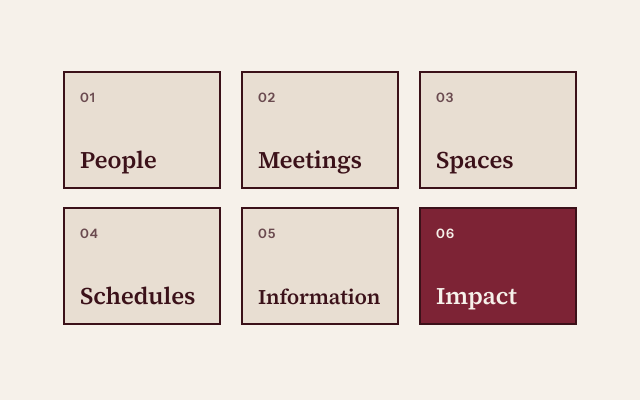
What Event Resource Management means
Event Resource Management (ERM) is the coordinated management of the people, meetings, spaces, schedules, information, and interactions that make an event work. It connects operational planning with what happens onsite and what the organization learns afterward.
Event marketers already manage these moving parts, often across spreadsheets, calendars, inboxes, messaging apps, and event platforms. ERM brings them into a shared operating approach so changes are visible, participants are prepared, and outcomes can be measured.
The six building blocks of ERM

People
Who is attending, what role they play, and when they are available.

Meetings
Requests, priorities, confirmations, changes, and outcomes.

Spaces
Booth areas, meeting rooms, and capacity constraints.

Schedules
A reliable shared view of assignments and updates.

Information
Event details, account context, and participant guidance.

Impact
Target account coverage, follow up, opportunities, and outcomes.
Why a connected approach matters
A meeting change can affect room availability, executive schedules, account coverage, and the experience of the person arriving at the booth. When information lives in separate systems, each adjustment creates more manual work and more opportunity for confusion.
ERM treats these as connected decisions rather than isolated tasks. The objective is more than a cleaner schedule. It is a better experience for the entire event team and a more reliable path from event investment to business impact.
Who uses ERM
Event marketers, field marketing teams, event operations leads, sales leaders, customer facing participants, executives, and the teams responsible for reporting event performance.
How to get started
Map your current workflow
Trace it from planning through post event reporting. Note where teams re-enter data, wait for updates, or lose context.Define one shared source
Keep meetings, attendees, spaces, and key event information in one place. Clarify who approves changes and who needs to know.Agree on outcomes before the event
Target account engagement, meetings held, follow up completion, and influenced opportunities.Review and improve
Look at what happened after the event, then improve the workflow before the next one.
When software helps
An ERM platform can make the connected approach easier to run at scale, particularly when events involve multiple teams, frequent meeting changes, or complex reporting. Software should support the process, not replace clear ownership and planning.
Frequently asked questions
Is ERM the same as event management?
Not exactly. Event management can cover registration, venues, budgets, production, and attendee experiences. ERM focuses on coordinating operational resources and interactions, especially when multiple teams need to work together.
Does ERM only apply to trade shows?
No. Its principles support conferences, roadshows, executive events, customer gatherings, and other events with complex coordination needs.
Do teams need software?
No. The framework can begin with clear processes and shared information. Software becomes useful as coordination volume and complexity increase.